
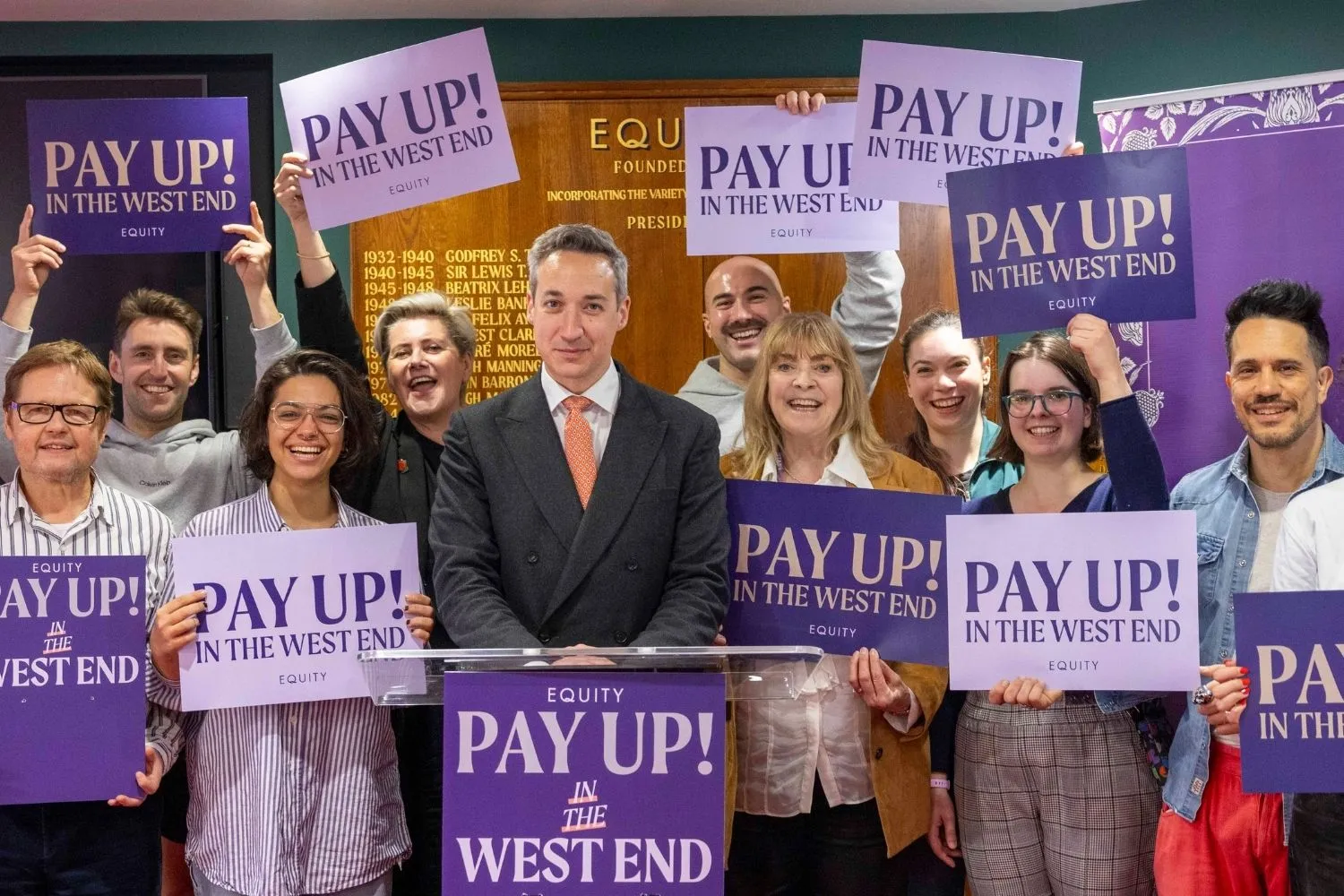
West End performers and stage managers approve new pay and work-life balance deal
West End performers and stage managers have overwhelmingly accepted a new three-year agreement with the Society of London Theatre (SOLT) that raises minimum pay and improves working conditions. The deal marks a significant development in addressing longstanding concerns over pay and work-life balance in London’s theatre sector.
Equity members voted 98% in favour of the agreement on a 75% turnout, signalling broad support for the deal that runs from April 2026 to April 2029. It guarantees a minimum pay rise of at least 13.5% over three years alongside enhanced holiday entitlement and family leave provisions.
The agreement includes two additional days of holiday leave, two weeks of extra paid maternity and adoption leave, and doubled paid paternity leave. It also introduces guaranteed minimum payments for fight captains and social media representatives and new clauses addressing cultural sensitivity in the provision of wigs, hair, and make-up.
Improvements extend to better notice and scheduling guarantees for performers and stage managers while offering producers more modern scheduling options. The deal also simplifies tour planning and provides greater certainty for both sides over its three-year span.
Paul W Fleming, Equity’s general secretary, noted that the agreement achieves goals pursued for over a decade, including improved annual leave, reduced rehearsal weeks, and enhanced work-life balance, while lifting minimum pay to record levels in real terms. He described the deal as a potential starting point for “more regular high-level exchanges on terms and conditions.”
Hannah Essex, co-chief executive of the Society of London Theatre, acknowledged the financial pressures on theatres due to rising costs and increased National Insurance contributions. She highlighted the sector’s exclusion from targeted business rates relief and called on the government to provide policy support for continued investment in the theatre workforce, productions, and audiences.
The agreement represents a notable step in addressing historic pay and working condition challenges in the West End, potentially setting a new standard for future negotiations in the industry.