

London Theatre Seating Explained: Stalls vs Dress Circle vs Upper Circle vs Balcony
Picking the right London theatre seat can transform your night. This guide explains Stalls, Dress Circle, Upper Circle, and Balcony clearly, helping you compare view, comfort, acoustics, and price without guesswork. You will avoid common mistakes, choose confidently for your priorities, and compare options on MusicalsAndTickets.co.uk before booking this season.
London Theatre Seating Terms Made Simple
London theatre seat names can feel inconsistent at first, especially when each venue has its own layout quirks.
This quick glossary gives you a practical understanding of what each level usually means, so you can read a seating plan confidently and compare sections without second-guessing.
Stalls
The Stalls are the ground-level seats, closest to the stage. They are often the first choice for people who want an immersive, up-close experience, but “closest” is not always “best” for every show or every seat row.
- Front Stalls: Very close to performers, strong emotional intensity, but sometimes limited full-stage perspective.
- Mid Stalls: Usually a balanced zone for facial detail and stage coverage.
- Rear Stalls: Slightly farther away, often better overall composition and sometimes better value.
- When proximity helps: Dialogue-heavy shows, acting detail, and dramatic close moments.
- When proximity hurts: Large choreography, overhead staging effects, or if you dislike looking up for long periods.
Dress Circle
The Dress Circle is typically the first elevated tier above the Stalls. In many London theatres, it is considered a strong all-round choice because it offers a wider, cleaner view of the stage picture while still feeling connected to the performance.
- Position: First raised level, often central and visually balanced.
- Main advantage: Better overview of blocking, choreography, and scene transitions.
- Why regulars like it: It often delivers a reliable mix of clarity, comfort, and value.
Upper Circle

The Upper Circle sits higher and is usually more budget-friendly. You gain a broader top-down view of staging geometry, but you may lose some facial detail compared with lower tiers.
- Price profile: Commonly cheaper than Stalls and Dress Circle.
- View profile: Strong for full-stage patterns and ensemble formations.
- Trade-off: Greater distance can reduce expression detail and intimacy.
Balcony
Balcony often refers to the highest seating tier, but naming varies by venue. In some theatres, similar zones may be labeled differently, so always read that theatre’s map carefully before booking.
- Naming note: “Balcony” is not universal terminology across all London theatres.
- Alternative labels: Some venues use terms like Grand Circle or other top-tier names instead.
- Practical takeaway: Focus on row position and sightline notes, not just the tier name.
A simple rule: section names are your starting point, not the full decision. When checking options on MusicalsAndTickets.co.uk, compare row depth, side angle, and any restricted-view notes before checkout.
Stalls Deep Dive — Immersion, Detail, and Trade-Offs

Stalls seats have a premium reputation in London theatres, but they are not automatically the best choice for every person, every show, or every budget.
The real value of Stalls depends on row position, seat angle, and what kind of experience you want: emotional closeness, full-stage perspective, or price efficiency.
Front Stalls: Maximum Energy, Minimum Distance
Front Stalls put you close enough to catch subtle facial expression, costume texture, and small acting beats that can disappear at higher levels.
For intimate scenes, that proximity can feel electric. You are inside the emotional atmosphere, not just watching it.
The trade-off is physical and visual. In very close rows, you may need to tilt your head upward for long stretches, and some overhead choreography or high-set stage action can feel cropped.
If a production relies on big formations, flying elements, or vertical staging, being too close can reduce your sense of the full picture.
Mid Stalls: The Practical Sweet Spot for Detail + Balance
Mid Stalls are often the most dependable Stalls zone, especially for dialogue-heavy, acting-focused, or emotionally nuanced productions.
You stay close enough for expressive detail, but far enough back to read scene composition more comfortably.
- Strong face-level clarity without extreme upward viewing.
- Better balance between intimacy and stage coverage.
- Consistent choice for first-time visitors who want premium feel with fewer compromises.
Rear and Side Stalls: Often Smarter Value Than People Expect
Rear and side Stalls can sometimes outperform more expensive options in value terms, particularly when the central premium rows are priced aggressively.
You may give up some direct perspective, but gain better budget control for the same performance date.
The caution is simple: always check angle risk and potential obstructions. Side positions can clip entrances, corner blocking, or scenic detail, and some seats may have partial restrictions depending on theatre architecture.
- Rear Stalls: frequently calmer perspective and better pricing.
- Side Stalls: can be excellent value, but only if the angle is manageable.
- Key check: verify sightline warnings before purchase.
Who Should Prioritize Stalls
Stalls usually make the most sense for specific viewer goals rather than as a default rule.
- Fans of acting detail: ideal if facial expression and subtle performance choices matter most to you.
- First-date or special-occasion buyers: close-stage impact delivers a memorable “wow” factor.
- Repeat viewers: great when you already know the show and want a more immersive pass.
Bottom Line on Stalls
Think of Stalls as a tool, not a trophy. The best Stalls seat is rarely “the closest possible” seat; it is the one that matches your comfort, your viewing priorities, and your budget strategy.
Before booking, compare price differences for the same performance across Stalls rows and nearby sections on MusicalsAndTickets.co.uk.
That quick comparison often reveals better-value seats without sacrificing much of the experience.
Dress Circle Deep Dive — The “Best Overall” Contender
If Stalls are about proximity, the Dress Circle is about perspective. In many London theatres, this level gives you a cleaner read of the full stage picture without pushing you too far from the performers. That is why experienced theatregoers often treat it as the most strategic all-round choice, not just a compromise.
Why Dress Circle Often Beats Very Close Stalls for Overall View
Very close Stalls seats can feel intense, but they may narrow your viewing window during large scenes. The Dress Circle usually solves that by lifting your sightline and widening stage coverage, so transitions, spacing, and choreography read more naturally from left to right.
- More complete stage composition than very front Stalls rows.
- Better visual balance between foreground action and background staging.
- Less risk of missing overhead movement or upper-set details.
A Strong Match for Dance-Heavy and Ensemble-Led Shows
The Dress Circle is especially effective for productions built around movement, synchronized ensemble numbers, and layered stage pictures. You can follow formations, symmetry, and spacing with less head movement and fewer blind spots than in ultra-close seats.
- Excellent for choreography and large-cast musical numbers.
- Clearer reading of group blocking and visual storytelling.
- More consistent “whole-show” experience across different scene types.
Potential Drawbacks to Check Before You Buy
Dress Circle is strong, but not immune to seat-specific issues. The section name alone is never enough—row and seat position still decide quality.
- Front-row rail: in some theatres, safety rails can intrude on the lower part of the stage view.
- Side-angle seats: extreme sides may clip entrances or reduce depth perception.
- Overhang interactions: depending on venue geometry, the visual feel can change by row.
Practical rule: prioritize central seats first, then move outward only if the value difference is meaningful.
Who Should Prioritize Dress Circle
- First-time visitors: dependable balance of clarity, comfort, and immersion.
- Buyers with mixed priorities: strong middle ground for view quality and budget control.
- One-show city trips: safer choice when you want one ticket decision that minimizes regret.
Bottom Line
Dress Circle earns its “best overall” reputation because it blends panoramic staging with strong performance visibility. It may not deliver the raw closeness of front Stalls, but it often delivers a smarter, more complete viewing experience. Before checkout, compare Dress Circle rows against nearby Stalls options for the same performance on MusicalsAndTickets.co.uk to find the best value-to-view ratio.
Upper Circle Deep Dive — Budget Smart, Not Budget Blind
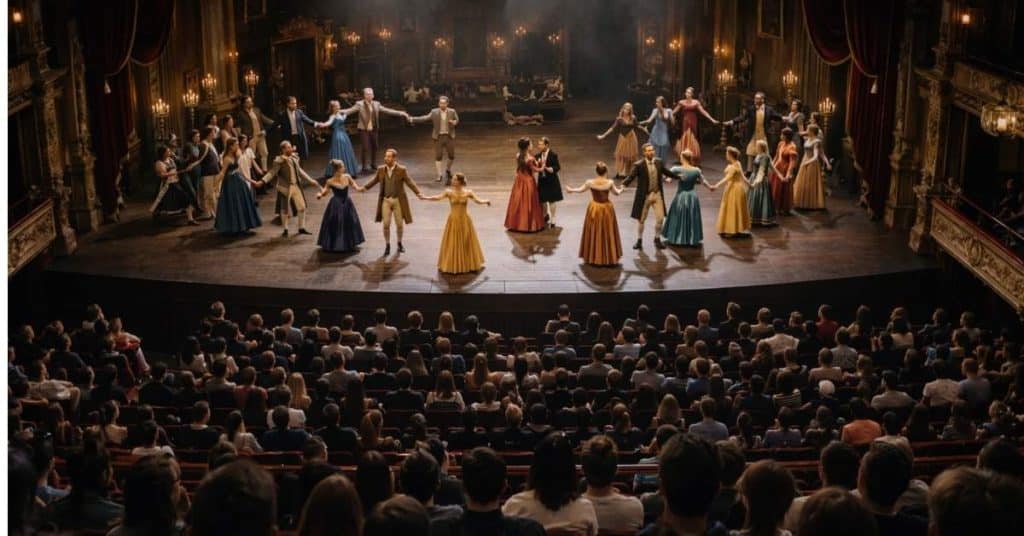
Upper Circle seats can be an excellent strategy when you want strong value, but they work best when you understand the trade-offs before checkout.
The goal is simple: save money without sacrificing the parts of the show that matter most to you.
What You Gain
The biggest advantage is price. Upper Circle tickets usually offer a lower entry point, which makes popular shows more accessible and gives you flexibility to pick better dates or book more often.
- Lower cost: often one of the most affordable ways into a West End performance.
- Broader top-down stage map: easier to read formations, spacing, and choreography patterns.
- Good strategic value: useful when premium sections are priced too aggressively.
What You Lose
The main compromise is distance. You can still enjoy the performance, but subtle acting details may be less visible than in Stalls or central Dress Circle seats.
- Less facial detail: micro-expressions and small emotional beats are harder to catch.
- Reduced intimacy: some scenes can feel less emotionally immediate from farther back.
- Occasional nuance loss: quiet, expression-led moments may not hit with the same intensity.
Steepness and Comfort: Check This Before You Book
Upper Circle geometry varies by theatre, and some top tiers can feel steep. If you are sensitive to height, balance, or vertigo, seat location matters as much as price.
- Prioritize central seats over extreme corners when possible.
- Avoid the most exposed edge positions if heights make you uncomfortable.
- Allow extra time for stairs and interval movement in older venues.
Best Use Cases for Upper Circle
- Visually large productions: strong for big ensemble scenes and full-stage patterns.
- Repeat visits: smart when you already know the show and want a lower-cost return.
- Students and budget-focused buyers: practical entry point without missing the core experience.
- Spontaneous plans: useful for last-minute theatre nights when premium tiers are limited or expensive.
How to Avoid “Cheap Ticket Regret”
Treat Upper Circle as a value tool, not a blind default. Choose central rows first, verify comfort factors, and compare nearby sections for the same performance before buying.
A quick cross-check on MusicalsAndTickets.co.uk can help you spot when a modest price increase delivers a noticeably better view.
Balcony Explained — Why Names and Experiences Vary by Theatre
“Balcony” sounds straightforward, but in London theatres it is one of the most confusing seating terms for first-time buyers.
The reason is simple: venue architecture is historic, terminology is inconsistent, and two theatres can use different names for very similar height levels.
Not Every London Theatre Uses the Same Tier Labels
Some venues clearly label a top level as Balcony, while others use Upper Circle, Grand Circle, or another house-specific term.
That means section names are helpful, but they are not universal rules. A “Balcony” in one theatre can feel similar to an “Upper Circle” in another.
Balcony Can Overlap with Top-Circle Seating in Practice
Conceptually, Balcony often refers to the highest or one of the highest tiers. In real booking flow, it may overlap with what another venue calls top-circle seating.
The practical result is that height, angle, and row position matter more than the label itself.
- Top-tier seats can offer strong full-stage geometry for big visual moments.
- Distance may reduce facial detail and emotional micro-expression visibility.
- Steep rake and stair access can vary significantly from theatre to theatre.
What to Do Before Checkout
Always inspect the specific seating plan of the theatre you are booking. Do not assume two venues use the same naming logic.
- Open the exact venue map for your performance date.
- Check where the tier sits relative to stage height and overhang lines.
- Review row depth and side-angle risk, not only section name.
- Confirm any restricted-view notes before payment.
Quick rule: treat “Balcony” as a starting term, not a quality verdict.
Compare the theatre-specific map and seat pricing carefully on MusicalsAndTickets.co.uk so the label never misleads your final choice.
Side-by-Side Comparison Table (Core Decision Grid)
Use this matrix as a quick decision tool before you book. It compresses the most important trade-offs—view quality, immersion, comfort risk, and price—so you can match the right section to your priorities instead of guessing from seat labels alone.
| Section | View Quality | Immersion | Comfort Risk | Typical Price Tier | Best For |
|---|---|---|---|---|---|
| Stalls | High detail, angle varies by row | Very high | Neck/angle risk in very front rows | High | Acting detail, close-stage energy |
| Dress Circle | Balanced and panoramic | High | Rail/side constraints in some seats | Mid to high | First-timers, all-round value |
| Upper Circle | Full-stage geometry, less detail | Moderate | Steepness and distance | Low to mid | Budget-conscious viewers |
| Balcony | Varies by theatre and label | Low to moderate | Height/steepness in top tiers | Usually low | Lowest-price entry, repeat shows |
Practical takeaway: if you want one reliable default, start with central Dress Circle; if you want maximum closeness, test mid-Stalls first; if budget leads, compare central Upper Circle and Balcony options carefully on MusicalsAndTickets.co.uk for the same performance.
What Actually Affects Your Experience
Section labels are useful, but they do not guarantee a great night. Two seats in the same tier can feel completely different depending on sightline geometry, physical comfort, sound behavior, and the production style itself. If you want consistently better outcomes, evaluate these four factors before checkout.
Sightlines
Sightline quality decides what you actually see, not what the seating tier promises.
- Rake angle and head-blocking risk: steeper rake can improve visibility over the row in front, while flatter zones increase the chance of blocked stage areas.
- Physical obstructions: pillars, safety rails, balcony lips, and side-wall cropping can remove key parts of entrances, choreography, or set detail.
- Restricted view labels: this can mean anything from a small corner cut to a major storytelling loss. Treat it as a spectrum, not a single risk level.
Practical rule: central seats usually reduce angle problems, while extreme sides increase uncertainty, especially in visually complex shows.
Comfort
Comfort directly affects focus. A technically good view can still feel disappointing if the seat is physically tiring.
- Legroom variability: row depth can change noticeably within the same section.
- Seat width and armrest spacing: older London venues may feel tighter than expected.
- Steep stairs and interval flow: top tiers and edge positions can add effort during entry, interval, and exit.
If you are tall, mobility-sensitive, or simply want a relaxed experience, prioritize comfort constraints early, not as a last-minute compromise.
Acoustics
Loud does not always mean clear. Sound quality is about intelligibility, tonal balance, and how voices sit with the orchestra.
- Loudness vs clarity: very close seats can feel powerful but may not always deliver the cleanest vocal blend.
- Elevation advantage: slightly raised positions can improve orchestral integration and overall mix coherence in some theatres.
For music-led productions, choose seats that preserve both vocal detail and ensemble balance rather than chasing volume alone.
Show Type Fit
The “best seat” changes with the production’s visual and dramatic design.
- Dance-heavy spectacle: benefits from a broader perspective that captures formations and full-stage movement.
- Intimate acting-led drama: often benefits from closer seating where facial nuance and quiet emotional beats are easier to read.
- Staging style matters: vertical effects, ensemble density, and scene transitions can all shift the ideal row and tier.
Smart strategy: match seat choice to how the show communicates—through scale, motion, and design, or through close emotional detail.
Final takeaway: section name is just the headline. Real seat quality comes from the combination of sightline, comfort, acoustics, and show fit. Use this framework while comparing options on MusicalsAndTickets.co.uk to reduce guesswork and avoid post-booking regret.
Best Seats by Goal

The best seat is not universal—it depends on what you want from the night. Use these goal-based scenarios to match your priorities with the right section quickly, then compare exact rows and prices before checkout.
If you want maximum immersion
Choose central mid-Stalls. You stay close enough for facial detail and emotional intensity, but far enough back to keep a comfortable, complete stage view. This is the strongest option when you want to feel inside the performance rather than watching from a distance.
If you want best overall value
Start with central Dress Circle. It usually gives the most balanced mix of perspective, comfort, and price-to-quality return. For many first-time visitors, this is the lowest-risk, high-satisfaction choice across different show types.
If you want the cheapest acceptable view
Look at central front Upper Circle. This area often delivers strong budget value while still preserving a usable stage picture. Just verify any rail interference and side-angle limitations before buying, because top-tier value drops quickly in problematic rows.
If you’re tall
Prioritize aisle seats and rows known for better legroom over pure section prestige. A comfortable seat with slightly less premium positioning often produces a better overall experience than a cramped “better” section.
If you’re short
Avoid flatter rows where head-blocking is more likely, especially if the row in front sits at a similar height. Choose areas with stronger rake and cleaner forward sightlines, even if that means moving one price band up.
If you’re with kids
Avoid extreme side angles and very steep top tiers. Central viewing positions with simpler access tend to reduce fatigue and frustration, especially during long runtimes and busy interval movement.
Quick Decision Formula
- Emotion first: central mid-Stalls
- Balance first: central Dress Circle
- Budget first: central front Upper Circle
Final step: compare the same performance across these shortlists on MusicalsAndTickets.co.uk. A small price difference often buys a meaningful upgrade in angle, comfort, or overall stage clarity.
Booking Strategy — How to Pick Better Seats in 5 Minutes
You do not need a long research session to book well. Use this fast five-step method to make a confident decision, reduce seat regret, and keep your budget under control. The key is to compare with structure, not emotion.
-
Set your priority first.
Decide what matters most for this specific show: immersion, full-stage view, comfort, or budget.
One clear priority prevents random upgrades and helps you ignore seats that look tempting but do not match your goal. -
Choose a section shortlist (maximum two tiers).
Keep your shortlist tight—for example, “mid-Stalls + Dress Circle” or “Dress Circle + Upper Circle.”
Limiting choices speeds up comparison and makes trade-offs easier to judge. -
Filter out known risk zones immediately.
Remove seats in extreme side angles, rows with potential front-rail interference, and steep top-corner positions if comfort or vertigo is a concern.
Eliminating high-risk areas first saves time and avoids expensive mistakes. -
Compare seat clusters, not one impulse seat.
Instead of fixating on a single seat, compare 2–4 nearby clusters in your shortlist.
Small row or angle changes can produce a noticeably better view for a similar price. -
Check final value across dates before checkout.
Compare the same section and row quality across different performance dates on MusicalsAndTickets.co.uk (https://musicalsandtickets.co.uk/).
Pricing can shift significantly by day and time, and a small date change often unlocks better seats at a better rate.
Quick rule: choose with a framework, not with FOMO. In five minutes, this process helps you book seats that match your real priorities—without overpaying for the wrong view.
Price vs Value — When Paying More Is Worth It (and When It Isn’t)
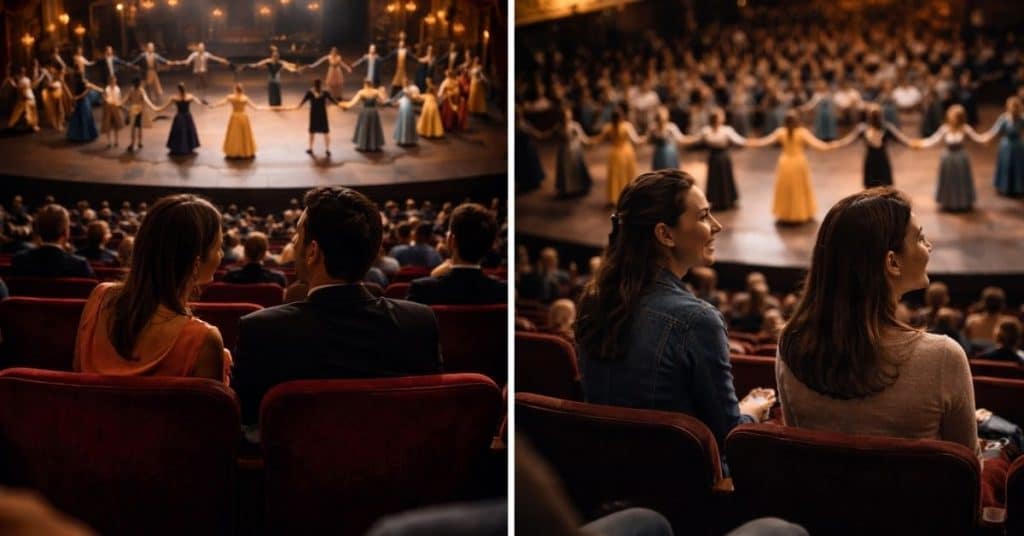
Higher price does not automatically mean better experience. In London theatres, real value comes from how well a seat matches your sightline, comfort, and show type—not from the section label alone. If you evaluate tickets through value instead of status, you reduce booking regret and make smarter upgrades.
When Premium Seats Truly Change the Experience
Paying more is usually worth it when the upgrade solves a real viewing problem or adds meaningful performance detail you care about.
- Major sightline improvement: moving from an angled or partially blocked seat to a clean central view.
- Better emotional detail: closer, clearer facial expression for acting-led or dialogue-heavy productions.
- Comfort upgrade: better legroom, less neck strain, easier access in long shows.
- Special-occasion value: if this is your one big theatre night, paying for lower risk can be the smarter choice.
If the extra spend clearly improves what you will see, hear, or feel, it is value. If it only improves the ticket label, it is usually hype.
When Mid-Tier Seats Are Nearly Identical in Practical Quality
This is where many savvy buyers win. In a lot of performances, central mid-tier seats can deliver almost the same practical quality as pricier options.
- Central Dress Circle often rivals expensive close seats for overall stage readability.
- A one-row shift can preserve quality while reducing price noticeably.
- For choreography-heavy musicals, balanced perspective can outperform ultra-close proximity.
If two options are visually similar, choose the one with better comfort and lower total cost. The audience rarely remembers what tier they bought—they remember whether the show felt clear and engaging.
When Budget Tiers Are Perfectly Fine for the Right Show
Lower tiers can be excellent when matched to the right production and expectations.
- Large visual spectacles: upper-level seats can still deliver strong full-stage geometry.
- Repeat visits: if you already know the show, budget seats often make perfect sense.
- Spontaneous plans: budget tiers are ideal for flexible, low-regret theatre nights.
- Price-sensitive bookings: students, families, and multi-show trips often get better total value from smart budget positioning.
Budget works best when you stay central where possible and avoid known risk zones (extreme sides, heavy rail interference, steep corner positions).
Mini-Framework for Faster Decisions
Pay extra for angle correction, not for proximity hype.
In practice, this means:
- Upgrade to fix a bad angle, obstruction, or comfort issue.
- Do not upgrade just because a seat is physically closer.
- Prioritize clean sightlines and balanced perspective over status pricing.
Final check before booking: compare similar seat clusters across sections and dates on MusicalsAndTickets.co.uk. Small price differences often reveal high-value alternatives that feel just as good—or better—during the actual performance.
Common Mistakes to Avoid
Most ticket regret comes from a few repeat errors, not from “bad luck.”
Avoid these mistakes and your odds of getting a great seat increase immediately.
Assuming “Closer = Better” for Every Show
Closer seats can be amazing for acting detail, but they are not always best for large-scale staging.
In dance-heavy or spectacle-driven productions, very close rows may reduce your ability to read full formations and overhead movement.
Ignoring Restricted-View Labels
“Restricted view” is not a decorative warning. It can mean a minor corner cut—or a meaningful loss of key stage action.
Treat every restriction note as a serious decision factor before checkout.
Buying Extreme Side Seats for Choreography-Heavy Productions
Extreme side angles can distort spacing, hide entrances, and weaken the visual impact of ensemble numbers.
If choreography is a big part of the show, prioritize central alignment over raw proximity.
Forgetting Comfort Needs on Long Runtime Shows
A technically good view can still feel disappointing if you are uncomfortable for two-plus hours.
Legroom, seat width, stair steepness, and easy interval movement all matter more than people expect.
Checking Only One Date/Time Instead of Comparing Options
Many buyers overpay because they only check one performance. Prices and seat availability can shift by day and time.
Compare multiple dates for the same show on MusicalsAndTickets.co.uk before booking—small schedule changes often unlock better value.
Quick rule: optimize for sightline + comfort + show fit, not just distance to stage.
Accessibility & Practical Comfort Notes
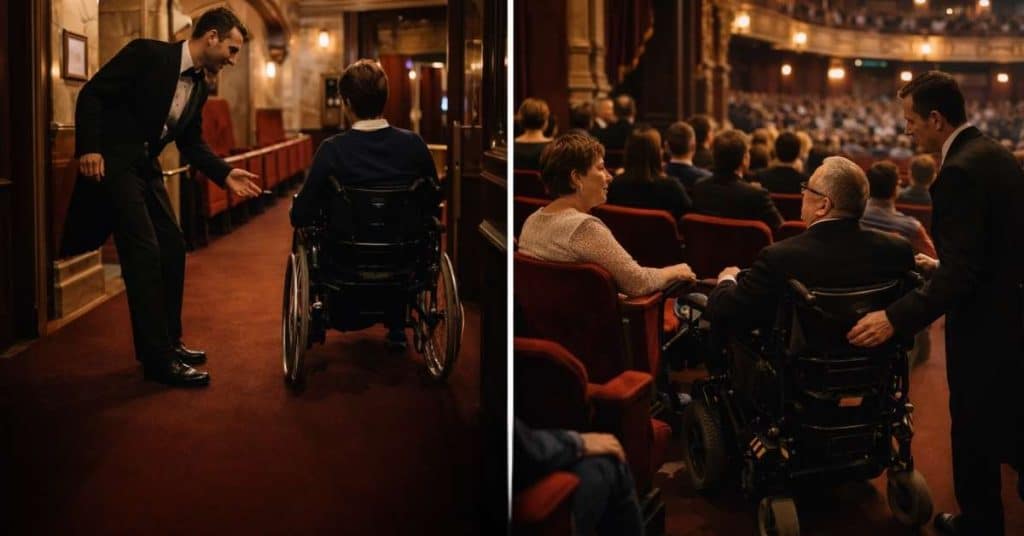
A great seat is not only about view and price—it is also about how easy and comfortable the full theatre visit feels from arrival to exit.
Accessibility can vary significantly across London venues, so practical planning is essential before you confirm any booking.
Step-Free Access Varies by Section and Theatre
Do not assume every level has the same access route. In many venues, one section may be straightforward to reach while another includes multiple stairs, narrow turns, or older lift layouts.
- Access routes can differ even within the same theatre.
- Some rows are easier to enter and exit than others.
- Top tiers may involve steeper stairways and longer climbs.
Check Mobility Needs Before Checkout
If you or someone in your group has mobility needs, verify details first and choose seats that reduce physical strain.
A slightly different row or level can make a major difference in comfort and confidence.
- Prioritize easier entry points and simpler internal routes.
- Consider aisle access if frequent movement may be needed.
- Avoid last-minute assumptions based only on section name.
Interval Movement Ease Differs by Row and Level
Interval comfort is often overlooked. Congestion near stairs, tight row spacing, and long vertical routes can affect the overall experience, especially in sold-out performances.
- Rows near cleaner access paths can save time and effort.
- Steep upper levels may feel more demanding during busy intervals.
- Comfort over the full evening is usually worth a small seat adjustment.
What to Verify Before You Purchase
Always confirm theatre-specific access and seating details directly on the performance seating map before payment.
This step helps you avoid surprises and choose seats that are practical for your needs, not just visually appealing on paper.
- Open the exact seating map for your selected performance date.
- Review section access routes, row position, and any comfort notes.
- Check movement practicality for arrival, interval, and exit.
- Then compare final options on MusicalsAndTickets.co.uk before booking.
Quick Decision Cheat Sheet
- Best all-round: Dress Circle (central rows)
- Most immersive: Stalls (avoid very front if you dislike neck tilt)
- Best budget: Upper Circle (central seats first)
- Most variable naming: Balcony/top tier
Conclusion — Pick Seats Like a Regular, Even on Your First Trip

You now have the framework that frequent theatregoers use in practice. Section labels are a useful starting point, but they do not make the final decision for you. The real result comes from row position, viewing angle, comfort, and how those factors fit the specific show.
Go in with a clear goal and your seat choice gets much easier: immersive energy, balanced full-stage perspective, or budget-first value. In other words, choose by your goal, not by hype.
Before you book, run one final comparison of section and date combinations on MusicalsAndTickets.co.uk (https://musicalsandtickets.co.uk/). A small switch in row or performance time can deliver a noticeably better experience for the same budget.
FAQ
Are Stalls better than Dress Circle in London theatres?
Not always. Stalls usually win on closeness and facial detail, while Dress Circle often wins on balanced full-stage perspective.
If you want immersion, choose mid-Stalls; if you want a safer all-round view, choose central Dress Circle.
Is Upper Circle too far for musicals?
It depends on the production and your expectations. Upper Circle can still be very enjoyable for large, visual shows, especially from central seats.
You may lose some facial nuance, but you often gain a clear top-down view and better prices.
What does restricted view usually mean?
It usually means part of the stage is blocked by architecture or seat angle, such as rails, pillars, overhang, or side-wall cropping.
The impact can be minor or significant, so treat each restricted-view seat as a case-by-case decision, not a standard discount label.
Is Balcony the same as Upper Circle?
Sometimes similar, but not always identical. London theatres use different naming systems, and one venue’s Balcony may resemble another venue’s Upper or Grand Circle.
Always read the specific seating map for that theatre before checkout.
Where should I sit for my first West End musical?
Central Dress Circle is usually the safest first choice because it balances visibility, comfort, and overall value.
If your priority is emotional closeness, central mid-Stalls is a strong alternative.
Which seats are best for tall people?
Prioritize aisle seats and rows with better legroom over section prestige.
A slightly less premium location with more space is often a better real-world experience than a cramped higher-priced seat.
How can I find value seats for popular shows?
Compare multiple dates and times, shortlist two sections maximum, and avoid known risk zones like extreme sides or heavy rail interference.
Small shifts in performance time can unlock noticeably better seat quality at a similar price.
Can cheaper seats still offer a good experience?
Yes—if you choose strategically. Central Upper Circle or top-tier seats can deliver strong value for visually large productions, repeat visits, and flexible plans.
Cheaper seats are most effective when you protect sightlines and comfort first.
Compare section, row, and date combinations on MusicalsAndTickets.co.uk (https://musicalsandtickets.co.uk/) before booking to find the best value-to-view balance for your show.