
Planning a West End Weekend: 2-Day Itinerary Combining Musicals, Food and Sightseeing
Planning a West End weekend is easiest when you anchor everything around curtain times. This guide gives you a practical two-day itinerary that blends musicals, food, and sightseeing without rush or guesswork. You’ll get booking order, timing buffers, budget-friendly choices, and backup plans for weather, transport, and late-night travel home.
Quick Answer — Can You Really Do Musicals, Food and Sightseeing in 2 Days?
Yes—you absolutely can, and without rushing like you are in a reality show finale. The key is structure, not stamina. If you lock your theatre times first and build everything else around them, a two-day West End weekend becomes smooth, realistic, and genuinely fun.
Yes, if you use time blocks
Use anchor logic: set your fixed points first, then fill the gaps.
- Step 1: Choose showtime first (this is the non-negotiable anchor).
- Step 2: Place meals around the show (pre-theatre dinner timing is crucial).
- Step 3: Add sightseeing into open windows based on distance and energy.
This order prevents the most common mistake: booking attractions and meals first, then discovering they collide with curtain time.
The simple formula
- Morning sightseeing — one area, one core activity, minimal zigzag.
- Pre-theatre meal — early enough to avoid clock-watching and rushed payments.
- Evening show — arrive with buffer, not at the last minute.
- Late snack/drink or direct return — decide based on energy, weather, and transport.
Think of each day as a clean sequence, not a giant to-do list.
Pick one of three trip styles
- Relaxed (1 show total): best for first-timers, families, or low-stress weekends with more sightseeing time.
- Classic (2 shows total): the sweet spot for most visitors—one show each day with balanced food and attractions.
- Maximal (2 shows + late-night add-ons): ideal if you are experienced, fast-moving, and comfortable with tighter timing.
Fast planning tip: compare showtime combinations first on musicalsandtickets.co.uk, then build meals and sightseeing around the performance schedule. That one decision makes the whole weekend easier.
Step 1 — Choose Your Weekend Style and Budget

This is the decision that makes the rest of your itinerary either smooth or stressful. Before you choose restaurants, museums, or photo stops, set your budget tier and energy tier. When these two are clear, you avoid overcommitting and your weekend actually feels like a break—not a logistics exam.
Planning rule: choose your show schedule first, then build everything around it. A practical starting point is to compare performance times on musicalsandtickets.co.uk, then fit meals and sightseeing into the remaining windows.
Budget tiers
Lean weekend
- Focus: value seats, free/low-cost sightseeing, simple but good meals.
- Best for: travelers who want maximum experience with controlled spend.
- Strategy: one paid attraction per day max, public transport only, pre-book key items to avoid expensive last-minute choices.
- Watch-out: trying to “save” by overloading distances usually costs more in time and energy.
Mid-range weekend
- Focus: balanced comfort—solid theatre seats, quality pre-theatre dining, one or two paid attractions.
- Best for: most couples and friend groups.
- Strategy: pay for convenience where it matters (location, timing, reliable reservations), save on optional extras.
- Watch-out: booking too many “nice-to-have” add-ons that squeeze theatre buffers.
Premium weekend
- Focus: top-tier seats, signature dining, upgraded stay/transport, fewer compromises.
- Best for: celebration trips, anniversaries, special occasions.
- Strategy: fewer activities, higher quality per block; protect relaxed pacing between bookings.
- Watch-out: premium bookings placed too tightly can still create rush and missed moments.
Energy tiers
Low-walking
- Keep each day in one compact zone.
- Use short hops (Tube/taxi) instead of long cross-city walks.
- Ideal for families, recovery weekends, or anyone who wants a calm pace.
Standard walking
- One main area plus one nearby add-on.
- Comfortable pace with breaks and realistic meal windows.
- Best default for a 2-day West End plan.
High-intensity city pace
- Multiple blocks per day, tighter transitions, later finishes.
- Works only if you are used to fast city travel and strict timing.
- Requires backup routes and disciplined departure times.
Who are you planning for?
Couple
- Prioritize one “anchor moment” per day (show or dinner), keep one flexible block open.
- Avoid over-programming; romance dies in queue management.
Friends group
- Set a decision lead and hard meeting times.
- Choose restaurants with fast service windows before curtain.
- Build a regroup point in case the group splits.
Family with kids
- Use earlier meal slots, shorter walking loops, and buffer for breaks.
- Matinee-friendly rhythm often works better than late-night stacking.
Solo traveler
- Use flexible blocks and single-seat advantages for shows.
- Plan a clear late-return route and keep your evening logistics simple.
Quick anti-overcommit filter: if your day has more than one timed attraction plus a fixed dinner plus a show, cut one block. You will enjoy more by doing slightly less, on time.
Step 2 — Book in the Right Order (So the Plan Doesn’t Break)
Most West End weekend problems are not bad luck—they are bad sequencing. If you book in the wrong order, one change forces five more changes. If you book in the right order, the plan stays stable even when London throws you a small surprise.
Book order
Use this exact order to avoid cascading failures:
-
Show tickets and times
Curtain time is your fixed anchor. Everything else must wrap around it. Start by comparing date/time combinations on musicalsandtickets.co.uk and lock the performances first. -
Accommodation
Once showtimes are fixed, pick a base that minimizes late-night travel stress and keeps transfers short. -
Transport in/out
Confirm arrival and departure windows next, so you do not book activities you cannot realistically reach. -
Pre-theatre dinner
Reserve dinner only after theatre and transport are fixed. Aim for a slot that gives you a calm payment-and-walk buffer before entry. -
Timed attractions
Book museums/viewpoints last. These are easiest to swap if weather, delays, or energy levels change.
Booking timeline
2–3 weeks out
- Lock show tickets (best mix of choice and price control).
- Book accommodation close to your theatre plan.
- Reserve key dinner slots for both days (especially Friday/Saturday evenings).
7 days out
- Finalize train/flight windows and station transfer plan.
- Book timed attractions you truly care about (not “just in case” holds).
- Create Plan B options by area (one indoor, one quick outdoor).
48 hours out
- Reconfirm reservations and opening windows.
- Check weather and transport status; adjust walking routes.
- Shortlist one backup meal spot near each theatre.
Same-day backup options
- Use one flexible sightseeing block per day for swaps.
- Keep one backup show and one backup dinner option in the same district.
- Set a hard “decision deadline” (for example: decide by 14:00 for evening changes).
When same-day tickets can work
Same-day buying can be smart, but only if you treat it like a strategy—not a gamble. It works best for flexible travelers with backup choices, and worst for high-demand titles or strict one-night-only plans.
Risk vs Reward: Same-Day Ticket Buying
Reward
- Potential last-minute value on selected performances.
- Flexibility to choose based on weather, mood, or energy.
- Useful for solo travelers and small groups with adaptable plans.
Risk
- Availability uncertainty for popular shows and prime seat zones.
- You may spend valuable daytime hours searching instead of sightseeing.
- Late decisions can break dinner timing and increase pre-show stress.
Practical rule: if a specific show is the main reason for your trip, pre-book it. Use same-day only for your optional second show or flexible add-on slot.
Anti-break principle: fix what is hard to replace (shows, stay, travel), then flex what is easy to swap (attractions, meal backup, walk routes). That is how the itinerary survives real life.
Step 3 — Pick the Best Base Area for a Theatre Weekend
Your hotel location decides whether your weekend feels easy or exhausting. The goal is simple: reduce transfers, reduce uncertainty, and keep your pre-show window calm. If you choose the right base, you spend more time enjoying London and less time calculating routes on the pavement in the rain.
Covent Garden / Leicester Square / Soho core
This is the convenience-first option. Covent Garden sits in the West End and is strongly associated with theatres, restaurants, bars, shopping, and culture, which makes it a practical anchor for a theatre-led weekend.
For Theatreland access, key nearby stations commonly include Leicester Square, Piccadilly Circus, Tottenham Court Road, and (for many Covent Garden-area theatres) Covent Garden, Holborn, and Temple. That density is why staying in the core usually means easier walking and fewer transport decisions at night.
- Best for: first-time visitors, short 2-day trips, evenings with dinner + show.
- Trade-off: higher average room rates.
Slightly outside the core
If you want better hotel value, stay just outside the theatre core and use a short Tube hop or one direct bus/taxi route into the West End. This can lower accommodation cost while keeping your show nights efficient.
- Best for: budget control without sacrificing theatre plans.
- Rule: prioritize properties with straightforward late-evening return routes.
- Trade-off: slightly more planning and less spontaneous “just walk there” freedom.
Hotel selection checklist
- Late check-in reliability: confirm front-desk coverage if you may return after shows.
- Elevator/accessibility: essential for luggage, mobility needs, and post-show fatigue.
- Quiet rooms for sleep: request a room away from lifts/street-facing nightlife if possible.
- Fast route back after 10pm: test your real return path before booking, not after arrival.
Practical move: first compare show schedules on musicalsandtickets.co.uk, then pick a base that gives you the easiest night return from your main theatre area. That order prevents 80% of weekend friction.
Step 4 — Transport Plan That Survives Real London
A smooth West End weekend depends on one thing most people underestimate: your return journey after the show. Build transport into your plan early, and you avoid the classic late-night scramble.
Contactless/Oyster and caps
Use pay-as-you-go with contactless or Oyster as your default. Daily fare caps help control costs automatically once your travel reaches the cap threshold, which makes budgeting much easier across a busy weekend. Instead of buying separate tickets all day, you can focus on timing and route quality.
- Use the same card or device for every tap to keep fare calculations consistent.
- Always tap in and tap out correctly.
- Treat fare caps as a budget guardrail, not a reason to overtravel.
Journey planning workflow
Use a three-step check system so your itinerary stays stable even if service changes:
- Night before: check planned engineering works or closures.
- Morning: confirm your main route to sightseeing and theatre zones.
- Before leaving for dinner/show: check live status again and save a backup route.
This takes a few minutes and prevents most timing failures.
Late-night return after evening shows
After evening performances, choose your return mode in advance:
- Primary option: Night Tube routes where available.
- Fallback option: night bus corridor or licensed taxi/minicab pickup.
Do not decide this on the pavement after curtain call. Save your route before the show starts, especially on weekends, rainy nights, or if you are traveling with kids.
Practical planning move: lock showtimes first, then reverse-plan transport buffers from expected finish time. That simple order removes most end-of-night stress.
Step 5 — Weather-Proof the Weekend

London plans fail fastest when weather is treated as “background noise.” For a two-day West End trip, weather is a core planning input: it affects walk times, comfort, queue experience, and your ability to move between sightseeing, dinner, and theatre without stress.
Forecast and warning checks
Use a simple two-check routine:
- Check 1 (morning): open the city forecast and note temperature, rain probability, wind, and hourly trend.
- Check 2 (2–3 hours before leaving): recheck local warning status and adjust shoes/outerwear if conditions changed.
The Met Office London page gives a 7-day city forecast with warning context, and the warnings pages let you confirm whether anything is active for London specifically before you head out. Also, Met Office warning guidance notes that warnings can be issued with longer lead time out to day seven, which helps with weekend pre-planning. If a yellow/amber signal appears, read the impact details, not just the color label.
Outfit and bag logic
Use a modular setup that works for “cool outside, warmer inside” conditions:
- Layers: breathable base + light mid-layer + weather-ready outer shell.
- Compact umbrella: small enough for your day bag, sturdy enough for gusty streets.
- Water-resistant shoes: prioritize grip and comfort over delicate materials.
- Small day bag: keeps entry faster and avoids hauling wet extras all evening.
This combination protects you from rain/wind swings without overheating indoors or overpacking.
Rain fallback template
Do not cancel the day—swap blocks. Use this quick template:
- Original plan: outdoor photo-stop (60–90 min) + walk + pre-theatre meal.
- Rain fallback: museum/gallery block in the same zone (60–120 min) + shorter walk + same meal window.
- Execution rule: keep theatre arrival buffer untouched; only replace the sightseeing block.
In practice, that means your evening show still runs on time, and the day stays enjoyable instead of chaotic.
Practical move: lock your showtime first on musicalsandtickets.co.uk, then weather-proof the surrounding time blocks with this swap logic.
Day 1 Itinerary Template (Classic Version)
Use this as a copy-paste framework for your first West End day. It is built to keep travel simple, protect your theatre buffer, and avoid the “we planned too much” trap.
Morning (09:00–12:00) — Light sightseeing
Rule: pick one anchor zone only (no citywide zigzag).
- 09:00–09:30 — Coffee + orientation walk near your chosen zone.
- 09:30–11:30 — One main sightseeing block (museum/gallery/market streets).
- 11:30–12:00 — Short reset break (photos, rest, hydration, toilets).
Why this works: one-zone planning cuts transit friction and keeps energy high for the evening show.
Lunch (12:15–13:30)
Rule: eat close to your afternoon activity to minimize transfers.
- Book or choose a lunch spot within a short walk of your next block.
- Keep lunch satisfying but not heavy, so you avoid an afternoon energy dip.
- Pay and leave with a small time cushion, not at the exact handoff minute.
Afternoon (13:45–16:30)
Rule: choose one timed attraction or one compact walking route.
- Option A (timed attraction): 13:45 entry, 90–120 minutes inside, then a short nearby walk.
- Option B (compact route): 2–3 nearby landmarks with cafe stop, all within one district.
- 16:00–16:30 — Return to hotel or quick refresh stop before theatre area.
Do not add: a second major timed ticket here—this is where delays usually start.
Pre-theatre window (17:00–19:00)
Rule: early dinner + short walk to theatre zone.
- 17:00–18:15 — Pre-theatre meal (earlier is calmer and safer for timing).
- 18:15–18:45 — Walk to venue area; avoid risky long transfers now.
- 18:45–19:00 — Security/entry queue buffer, tickets ready, phone on silent.
Compare showtimes in advance on musicalsandtickets.co.uk so your dinner slot matches your exact curtain plan.
Evening show block (19:30 onward)
Rule: protect arrival buffer and decide your return plan before curtain.
- 19:30–show end — Performance time (including interval).
- Post-show (10–20 min) — Controlled venue exit and route check.
- Return plan A: direct Tube/night route back to hotel.
- Return plan B: pre-chosen taxi/night bus fallback if service changes.
- Optional add-on: quick dessert/drink only if energy and transport timing allow.
Classic Day 1 pacing formula: one zone morning + one afternoon block + one early dinner + one show.
That balance keeps the weekend enjoyable and sustainable for Day 2.
Day 2 Itinerary Template (Matinee + Flexible Evening)

Day 2 should feel efficient, not exhausting. The smartest approach is to protect your energy in the morning, anchor the day around a matinee, and keep the evening flexible based on how you feel after the show.
Slow start + brunch
Recovery-friendly pacing keeps the weekend enjoyable and prevents decision fatigue.
- 08:30–09:30 — Easy morning, no rushed departures.
- 09:30–11:00 — Brunch in or near your base area.
- 11:00–11:45 — Short walk or reset block (photos, coffee, quick browse).
Rule: avoid long cross-city travel before a matinee. Save energy for the second half of the day.
Midday/afternoon show (if matinee selected)
Keep your pre-show intake light and fast so you arrive comfortable and on time.
- 12:00–13:00 — Light meal/snack (not a heavy multi-course lunch).
- 13:00–13:30 — Move to theatre zone with buffer.
- 13:30–14:00 — Entry, seating, and pre-show settle-in.
- 14:00 onward — Matinee performance (timing varies by show).
Practical move: check exact matinee/evening combinations first on musicalsandtickets.co.uk, then build your Day 2 blocks around the confirmed curtain time.
Post-matinee split
After the matinee, choose one track based on energy, weather, and departure timing:
Option A: Museum/Gallery (low-stress indoor block)
- Best for rainy weather or tired feet.
- Plan 60–120 minutes max to avoid evening burnout.
Option B: Shopping/Photo Walk (light outdoor block)
- Best for dry weather and flexible pacing.
- Use one compact district only; avoid multiple long transfers.
Option C: Second evening show (advanced planners)
- Best for experienced city travelers with strong stamina.
- Take a proper reset between shows: hydration, short rest, early dinner.
- Keep backup transport ready for a later return.
Departure strategy
Build buffers so the weekend ends smoothly, not in a sprint.
- Luggage buffer: pack before your final outing or use secure storage with pickup time set.
- Station/airport transfer buffer: allow extra time for evening traffic, platform changes, and queue variability.
- Hard cutoff rule: set a latest “leave now” time and follow it, even if you skip one optional stop.
- Fallback route: save a second transport option before your final activity starts.
Best practice: if departure is same night, choose Option A or B. If departure is next morning, Option C becomes much more realistic.
Sightseeing Modules That Fit a Theatre Weekend
These plug-and-play modules are designed for a West End weekend: central, time-boxed, and easy to drop into the gaps between brunch, pre-theatre dinner, and curtain time. The rule is simple: pick one module per daytime block so you don’t turn your itinerary into a transport marathon.
Free/low-cost culture module
Best for: first-timers, rainy mornings, and “we want something iconic without spending half the day in queues.”
- Anchor idea: The National Gallery as a flexible, central culture block you can do in 60–120 minutes.
- Timing logic: Go earlier to avoid peak crowds; if you’re doing a Friday theatre night, the Gallery runs later hours on Fridays, which can also work as a pre-dinner culture stop.
- What to pre-plan: decide 2–3 “must-see” rooms or artists so you don’t wander until your legs revolt.
Planning note: the National Gallery publishes standard opening hours (daily daytime hours, with later opening on Fridays).
Museum module
Best for: weather-proof sightseeing with maximum “London value” per minute.
- Anchor idea: The British Museum as a half-day or tight 90-minute “highlights” visit.
- Timed access strategy: If you want a predictable entry experience, plan around timed slots—especially for popular periods and Friday late opening when demand spikes.
- Friday late advantage: The British Museum offers late opening on Fridays and recommends booking a timed slot in advance to guarantee entry.
- Execution tip: pick a tight shortlist (e.g., 3–5 galleries) so you don’t burn the rest of the day.
Planning note: the British Museum publishes Friday late-opening guidance and timed-slot details (including last-slot guidance) on its official pages.
Architecture/river walk module
Best for: a scenic reset between lunch and theatre, with strong “London atmosphere” and minimal scheduling risk.
- Anchor idea: Somerset House courtyard + a short riverside stretch as a low-pressure, high-payoff block.
- Time block: 45–90 minutes, depending on weather and energy.
- Why it fits theatre weekends: it’s central and works as a flexible filler when you don’t want another long museum session.
Planning note: Somerset House publishes site-wide opening times and entrance access windows, which is useful for building a reliable daytime block.
Viewpoint module
Best for: a “big skyline moment” without committing to a long attraction queue.
- Anchor idea: Sky Garden as a free-entry viewpoint with advance booking.
- Booking logic: free tickets are released on a rolling basis and are currently bookable up to around three weeks ahead; treat it like a timed attraction and lock it early if it matters to you.
- Time discipline: plan a tight window (roughly an hour on-site is usually enough) so it doesn’t eat your pre-theatre buffer.
- Backup approach: if you miss tickets, keep a second viewpoint option in mind or pivot to a museum/gallery block.
Planning note: Sky Garden’s official booking page outlines free access, opening windows, and the current “book up to three weeks in advance” model.
Food Plan — Eat Well Without Missing Curtain

A great West End evening starts with a meal plan that protects your theatre timing. The goal is simple: enjoy food, avoid stress, and arrive seated before the lights go down. If dinner timing is vague, everything after it becomes risky.
Pre-theatre meal timing rule
Book dinner early enough that you never have to sprint through dessert or chase the bill.
- Target dinner start: 2 to 2.5 hours before curtain.
- Target “pay and leave” time: 60–75 minutes before curtain.
- Theatre arrival buffer: 30–45 minutes before showtime for entry, checks, and seating.
Practical timing example (19:30 show): book dinner around 17:00–17:30, request the bill by 18:15–18:30, and plan to reach the theatre area by 18:45.
Pro move: mention “pre-theatre booking” when reserving and ask staff to pace service accordingly.
Cuisine strategy by schedule
Fast sit-down
- Best when your schedule is tight or you are unfamiliar with the area.
- Choose places with focused menus and predictable service speed.
- Order quickly: mains first, drinks simple, no complicated pacing.
Shared plates
- Best for couples/friends who want variety without a long formal sequence.
- Works well when everyone agrees to order in one round at the start.
- Avoid “we’ll decide later” ordering, which stretches meal time and adds stress.
Post-show dessert/supper
- Best if you want a relaxed evening and no pre-curtain pressure.
- Keep pre-theatre food lighter, then enjoy a proper late treat after the show.
- Ideal for weekend nights when you want atmosphere without watching the clock.
Dietary and group-size planning
- Add allergy notes in the booking: don’t wait until you’re seated to start substitutions.
- Confirm dietary needs at arrival: a 30-second check can prevent a 20-minute delay later.
- For groups: choose one ordering strategy early (set menu, shared starters, or direct mains).
- Assign one timing lead: one person tracks clock, asks for bill early, and keeps departure on schedule.
- Payment protection: request split-bill method upfront to avoid end-of-meal math chaos.
Execution tip: finalize showtime first, then choose dining slots around it. You can compare performance times on musicalsandtickets.co.uk and lock a dinner window that keeps your evening calm from first bite to curtain up.
Ticketing Strategy — Best Value Without Panic
The smartest ticket plan is not “cheapest at any cost.” It is the option that protects your weekend timing, seat quality, and stress level. Use this decision tree to buy confidently instead of refreshing pages all day.
Pre-book vs same-day
Think of this as certainty vs flexibility:
- Pre-book if the show is your top priority, you have a fixed weekend schedule, or you are traveling in a group.
- Same-day can work if you are flexible on title/seat location and comfortable with availability risk.
Quick decision tree:
- Is there one must-see show? Yes → pre-book now.
- Are your dinner/transport plans fixed? Yes → pre-book to protect timing.
- Are you open to 2–3 different shows? Yes → same-day becomes realistic.
- Traveling with kids or 4+ people? Yes → pre-book (same-day matching seats is harder).
Practical split strategy: pre-book your “anchor” show, leave the second show flexible for value hunting.
Seat strategy by trip goal
Choose seats by objective, not by emotion at checkout.
-
Best view: prioritize central sightlines and acoustic balance.
Use when: first time seeing a major favorite or celebration night. -
Best value: target solid sightlines at a lower tier/side section with acceptable trade-offs.
Use when: you want quality without premium pricing. -
Last-minute availability: take the best acceptable seats left and optimize the rest of the evening (easy dinner, short route, early arrival).
Use when: plans are flexible and speed matters more than perfection.
Seat sanity rule: never chase a tiny ticket saving if it creates a long transfer, late arrival risk, or poor comfort for a 2+ hour show.
Backup show list
Always build a backup list before you start buying. This prevents panic decisions when first-choice inventory changes.
- Keep two alternate shows in the same district and a similar time window.
- Match each backup with one nearby dinner option and one return route.
- Set a hard decision deadline (for example, by mid-afternoon for evening performances).
Copy-ready backup template:
- A-show: first choice, preferred seat zone, target max budget.
- B-show: same area, similar start time, value-focused seats.
- C-show: same area, widest availability, “no-stress” fallback.
Execution tip: compare showtimes first on musicalsandtickets.co.uk, then apply this decision tree. When time, seat goal, and budget are set in advance, you get better value with far less stress.
Budget Breakdown Templates
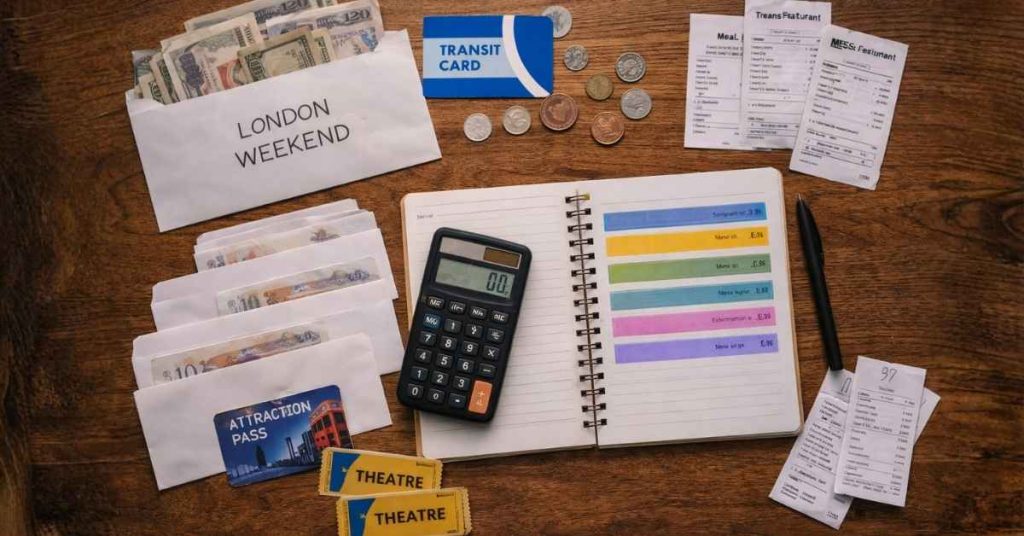
Use these templates to forecast your real West End weekend cost before you book anything. The fastest method is percentage budgeting: set one total budget, then split it across core categories so you don’t overspend early and panic later.
Total weekend formula: Tickets + Accommodation + Transport + Food + Sightseeing + Buffer = Total Budget
Lean weekend template
Goal: keep costs controlled while still enjoying one strong theatre night.
- Tickets: 28%
- Accommodation: 32%
- Transport: 12%
- Food: 18%
- Sightseeing: 5%
- Buffer: 5%
Example (per person, total budget £450):
- Tickets: £126
- Accommodation: £144
- Transport: £54
- Food: £81
- Sightseeing: £22.50
- Buffer: £22.50
Where to save smartly: choose value seats for one show, stay just outside the core with easy Tube access, use free museums/galleries, and keep one meal simple each day.
Mid-range weekend template
Goal: balanced comfort and value, without cutting key experiences.
- Tickets: 30%
- Accommodation: 30%
- Transport: 10%
- Food: 20%
- Sightseeing: 6%
- Buffer: 4%
Example (per person, total budget £850):
- Tickets: £255
- Accommodation: £255
- Transport: £85
- Food: £170
- Sightseeing: £51
- Buffer: £34
Comfort/value balance: better seat zones for your priority show, central-enough hotel for easier returns, and one quality pre-theatre dinner each day.
Premium weekend template
Goal: top experience with minimal compromises and smoother logistics.
- Tickets: 34%
- Accommodation: 32%
- Transport: 10%
- Food: 18%
- Sightseeing: 4%
- Buffer: 2%
Example (per person, total budget £1,500):
- Tickets: £510
- Accommodation: £480
- Transport: £150
- Food: £270
- Sightseeing: £60
- Buffer: £30
Upgrade focus: premium seat locations, signature dining, and flexible late-night transport so you trade stress for convenience.
Hidden-cost checklist
These are the costs that quietly break weekend budgets if you don’t plan for them:
- Service charges and booking fees: ticketing and dining extras can stack quickly.
- Late transport costs: post-show taxis/night routes may be pricier than daytime travel.
- Attraction add-ons: paid exhibitions, audio guides, cloakroom, special-entry upgrades.
- Luggage storage: station/day storage fees on arrival or departure day.
- Interval and impulse spend: drinks, snacks, merchandise, “quick” extras that aren’t quick for your wallet.
- Weather-driven spending: emergency umbrella, replacement shoes, extra ride-hailing in rain.
Final budgeting rule: lock showtimes first, then budget around those fixed anchors. If helpful, compare performance options on musicalsandtickets.co.uk before you finalize your spend split.
Versions by Traveler Type
You do not need four different itineraries. Keep one core 2-day structure, then adjust pacing, meal timing, and evening decisions based on who is traveling. Use the profiles below as a quick overlay on your existing plan.
Couples
Romantic pacing + one flexible block works best. Keep one “anchor moment” each day (show or dinner), then leave one open block for spontaneity.
- Best rhythm: light morning activity, relaxed lunch, reset break, early pre-theatre dinner, evening show.
- Flexible block idea: post-matinee stroll, dessert stop, or skyline viewpoint if energy is high.
- Timing rule: avoid stacking two strict timed bookings before an evening performance.
- Decision shortcut: if weather turns bad, keep dinner + show fixed and swap only sightseeing.
Friends groups
Group decision rules + split/merge points prevent chaos and late arrivals.
- Rule 1: appoint one timing lead to protect theatre arrival buffer.
- Rule 2: decide with a “2-option vote” (not 7 options and a debate marathon).
- Rule 3: allow one veto per person for major choices (show/food area), then lock the plan.
- Split point: optional free time after lunch (60–90 min).
- Merge point: regroup in theatre district 45–60 minutes before curtain.
- Payment tactic: pre-agree split-bill method to avoid delays before showtime.
Families
Earlier meal slots, energy management, and shorter walking loops keep the weekend enjoyable for everyone.
- Meal timing: book lunch and pre-theatre dinner earlier than adult-only schedules.
- Walking strategy: one compact zone per block; avoid long cross-city transfers.
- Energy buffer: include at least one seated break each half-day.
- Show strategy: prioritize matinees or earlier evening plans when possible.
- Comfort checklist: layers, water plan, simple snacks where allowed, and easy bathroom access planning.
- Exit rule: keep post-show return direct and simple—no extra detours unless kids still have energy.
Solo
Single-seat strategy, safe late return, and flexible same-day swaps give you the biggest advantage.
- Ticket edge: single seats often open useful last-minute options.
- Flex model: pre-book one anchor show, keep second slot adaptable by mood/weather.
- Safety protocol: save return route before curtain, keep backup transport option ready, and avoid unnecessary late detours.
- Packing rule: small bag, weather-ready layers, shoes built for walking.
- Time gain: solo movement is fast—use that to add one compact attraction, not three rushed ones.
Practical move for all traveler types: compare showtime combinations first on musicalsandtickets.co.uk, then apply the matching profile above to finalize meal timing, route buffers, and evening flexibility.
Common Planning Mistakes (and Fixes)

Most West End weekend problems are predictable. If you avoid the six mistakes below, your itinerary stays calm, on time, and much more enjoyable.
Booking theatre and dinner too tightly
Mistake: dinner starts too late, service runs long, and you end up speed-walking to the venue stressed.
Fix: book pre-theatre meals 2–2.5 hours before curtain, and aim to leave the restaurant 60–75 minutes before showtime. Ask for the bill early.
Overloading both days with far-apart sights
Mistake: too many attractions across multiple zones, causing constant transfers and fatigue.
Fix: use a one-zone rule per major block. Choose fewer stops with better routing instead of “seeing everything badly.”
Ignoring planned transport works
Mistake: assuming your usual line is running normally, then losing time to closures or diversions.
Fix: check route status the night before and again before leaving for dinner/show. Save one backup route in advance.
No weather backup
Mistake: rain or wind breaks outdoor plans, then the whole day slips.
Fix: prepare a swap plan: replace outdoor walking/photo blocks with an indoor museum/gallery block in the same area. Keep theatre timing untouched.
No post-show return plan
Mistake: deciding transport after curtain call, when crowds are high and options feel chaotic.
Fix: set a primary return route and a fallback (night bus/taxi) before the performance starts. Save both on your phone.
Underestimating queue/security time
Mistake: arriving at curtain time and expecting immediate entry.
Fix: arrive 30–45 minutes early (more for busy nights), carry one small bag, keep your ticket open, and move through checks efficiently.
Quick prevention rule: lock fixed anchors first (showtime, dinner window, return route), then fill flexible blocks around them. That one habit prevents most weekend failures.
24-Hour Checklist and 15-Minute Departure Checklist
This is your execution layer. When planning is done, these two checklists keep the weekend smooth in real-world conditions—rain, delays, crowds, and last-minute changes.
24-hour checklist
- Confirm show times — verify date, curtain time, and venue for each booking.
- Confirm reservations — recheck restaurant, attraction slots, and hotel notes (especially late check-in).
- Check weather/warnings — review next-day forecast and warning status; adjust shoes/layers accordingly.
- Check transport status/closures — verify planned works and likely route changes for both outbound and return trips.
- Charge phone/power bank — start the day at 100% battery; no navigation, no ticket stress.
- Save route options offline — keep primary and backup routes available if signal drops or apps lag.
Pro move: compare your final showtime windows on musicalsandtickets.co.uk one last time, then lock dinner and transfer buffers around those fixed anchors.
15-minute checklist
- Tickets ready — e-tickets/QR open and easy to access (screenshot backup saved).
- Card/contactless ready — one payment method set as primary for fast taps and easy fare tracking.
- Layers + umbrella — light, removable layers and compact umbrella packed.
- Route pinned — destination set with current ETA checked right before you leave.
- Backup return option saved — second route (or taxi/night bus fallback) ready before you step out.
Final go rule: if one item is missing, fix it now. A two-minute check beats a twenty-minute delay later.
Conclusion — Your Best Weekend Plan Is the One You Can Actually Execute

The most successful West End weekends are rarely the most packed. They are the most practical. Fewer zones, tighter routing, and realistic buffers give you better food, calmer transfers, and more enjoyment inside the theatre—without the rush, missed connections, or pre-curtain panic.
If you remember one rule, make it this: anchor your weekend around fixed curtain times, then fit meals, sightseeing, and transport around those anchors. That order protects the experience and keeps decisions simple when weather or transit changes.
Final CTA: compare show-time combinations on MusicalsAndTickets.co.uk, lock the best schedule for your trip style, and build the rest of your 2-day plan around those confirmed performance times.
FAQ
Is two days enough for two West End shows?
Yes — if you plan around fixed curtain times first, then place meals and sightseeing around those anchors. A practical pattern is one evening show on Day 1 and a matinee or second evening show on Day 2. This is realistic for many productions, but show schedules vary, so always confirm the exact performance pattern before you lock the rest of your weekend.
Should I book dinner before or after the show?
For most visitors, pre-theatre dinner is the safest default because it reduces late-night uncertainty and gives you a predictable flow. If you hate rushing, flip it: eat a lighter pre-show meal and do dessert/supper after curtain. Either way, protect a buffer so you are not paying the bill at the exact moment you should be entering the theatre. This one timing decision prevents a lot of stress.
What area is best to stay in for theatres?
The most practical base is usually in or near Covent Garden/Leicester Square/Soho because you’re close to Theatreland, dining, and strong transport connections. Many key West End venues are served by stations like Covent Garden, Holborn, Temple, Leicester Square, Piccadilly Circus, and Tottenham Court Road, which keeps transfers shorter and return trips easier.
Can I rely on same-day tickets only?
You can, but treat it as a risk-managed strategy, not a guarantee. Same-day stock can change throughout the day, and popular shows/seat zones can disappear quickly. A safer approach is to pre-book one “must-see” show and leave one slot flexible. If you are deal-hunting, use official same-day channels and check updates repeatedly because inventory and prices can move during the day.
How much walking should I expect?
Plan for meaningful walking even with Tube use: station-to-venue walks, pre-theatre dinner transfers, and post-show movement with crowds. In central Theatreland, many venues are clustered, but the full day (sightseeing + meals + theatre) can still add up quickly. If comfort matters, build shorter loops and avoid zigzagging across London between every block.
What if my train is delayed before curtain?
Move immediately to “damage control”: head straight to the venue, skip non-essential stops, and be ready for late-seating rules. Many theatres admit latecomers only at a suitable break, sometimes with temporary/alternative seats, and some policies warn that admission may not be guaranteed once the show has started. So if delay risk is high, prioritize earlier departures and larger buffers.
How early should I arrive at the theatre?
A strong default is 30–45 minutes early; for busier productions or tighter security flow, 60 minutes is smarter. Some shows explicitly recommend arrival at least 60 minutes before start time to clear checks and find seats comfortably. If you arrive early, you gain calm entry, cleaner seating, and lower “we might miss the start” anxiety.
Are Sunday itineraries different from Friday/Saturday?
Usually, yes. Weekend rhythm changes because late-night transport options are not identical across days, and same-day ticketing windows can differ on Sundays. That means Sunday plans benefit from earlier meal slots, tighter return planning, and fewer optional late add-ons. Treat Sunday as a shorter operational day and keep your final transfer simple.
What if it rains all weekend?
No problem if you plan modularly. Keep your show and dinner anchors fixed, then swap outdoor blocks for indoor museums/galleries in the same area. Check the city forecast and warning status on the day, then dress for rain (layers, compact umbrella, water-resistant shoes). The win is not “perfect weather”; the win is an itinerary that still works when weather turns.
Is Night Tube available after evening shows?
It can be — but not every night and not every line. Night Tube currently runs on Friday and Saturday nights on the Central, Jubilee, Northern, Piccadilly, and Victoria lines. For other nights, plan a fallback (night bus/taxi) and always check live status/planned closures before leaving the theatre, especially on major works weekends.
How do I keep costs down without a bad experience?
Use a “value-first, not cheapest-first” model: cap transport spend with contactless/Oyster, lock one priority show in advance, keep one flexible ticket slot, and use free/low-cost culture blocks during the day. This protects quality while controlling surprises. If you over-optimize only for lowest ticket price, you often lose money later through rushed transport, poor routing, and avoidable add-ons.
What’s the safest default weekend plan for first timers?
Use this baseline: stay near Theatreland, pre-book one evening show, reserve an early pre-theatre dinner, arrive 45–60 minutes before curtain with a small bag, and save both primary and backup return routes. Keep Day 2 flexible (matinee or sightseeing module) based on energy and weather. If you want a simple start, compare showtime combinations first on MusicalsAndTickets.co.uk and build around those fixed times.