Where to Buy London Musical Tickets Safely in 2026: Official Sites, Apps and Tourist Traps
Buying London musical tickets in 2026 can be simple, secure, and affordable—if you know where to look. This guide shows you how to use official sites, trusted apps, and verified sellers while avoiding common tourist traps, fake bargains, and risky resale offers, so your West End night starts with confidence.
The 2-Minute Safety Map: Where to Buy First (and Where Not to Start)
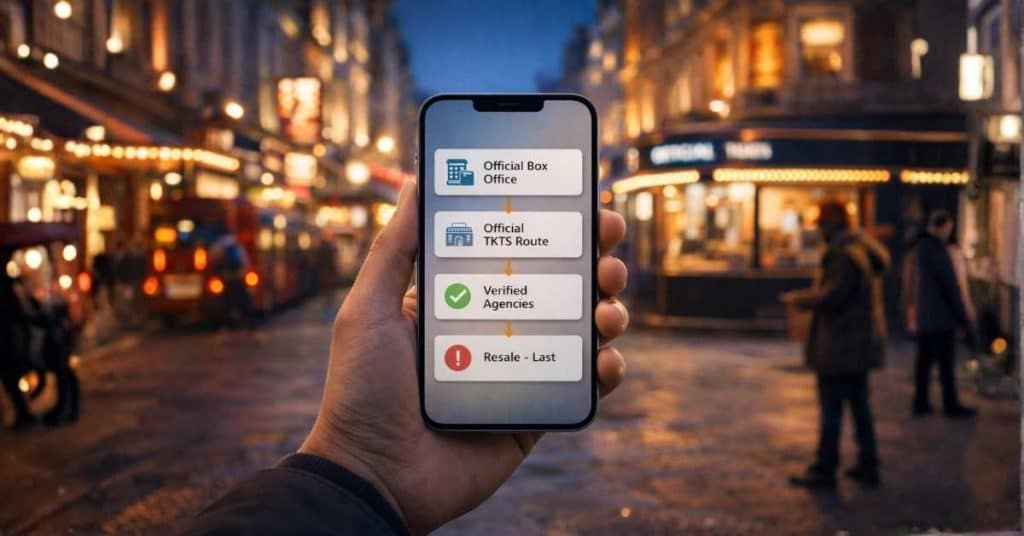
Use this quick route before you spend a pound. You can shortlist shows, dates, and venues on
musicalsandtickets.co.uk, then complete checkout only through the trusted ladder below.
Your safest order of operations
-
Official production or venue box office
Start with the show’s official seller first. This gives you the clearest terms, valid inventory, and the most direct customer support if plans change. -
Official London Theatre / TKTS ecosystem
Use this route for vetted access to London theatre offers, especially when you want same-day options without gambling on unknown sellers. -
STAR-member agencies
If you use an agency, choose one that follows recognised ticketing standards and transparent sales practices. -
Secondary markets only after disclosure checks pass
Use resale only when key details are clearly shown: seat info, restrictions, total price, and seller terms. If details are vague, walk away.
One crucial Leicester Square reality check
In Leicester Square, the official booth is explicitly identified as the SOLT-run Official London Theatre TKTS booth.
Nearby booths and ticket shops may look similar, but they are not automatically part of the same official operation.
Warning: Do not buy just because a booth is close to theatres or uses similar wording.
Verify the exact operator name first, confirm total price before payment, and avoid pressure sales language.
If you remember one thing, remember this… always follow the ladder in order: official first, verified second, resale last.
Official Sites You Can Trust First
Start with a simple workflow: discover shows and compare options on musicalsandtickets.co.uk, then complete your booking through a verified primary seller path. This keeps your search convenient while your payment stays in the safest lane.
Official London Theatre + TKTS (what makes it different)
Official London Theatre and TKTS stand out because the operation is run on a not-for-profit basis by SOLT, with a clearly identified official booth in Leicester Square. Another key advantage is consistency for same-day buying: the platform states parity between its online and in-person same-day prices. For buyers, that means less guesswork, fewer “street deal” surprises, and a cleaner decision process.
The venue box office rule
When possible, buy directly from the production or venue box office first. This reduces confusion around ticket fulfillment, delivery timing, exchange rules, and refund handling, because the seller, ticket issuer, and customer support path are aligned from the start.
Verification checklist (5 checks, 30 seconds):
- URL hygiene: check spelling, branding consistency, and no strange domain variations.
- HTTPS: confirm a secure connection before entering any payment details.
- Contact info: verify visible customer support details and a real business identity.
- Policy visibility: read refund, exchange, and delivery terms before checkout.
- Official cross-check: confirm the seller is listed or referenced by the show’s official site.
STAR member cross-check before payment
If you choose an agency, verify whether it is a STAR member before paying. Membership gives you a stronger confidence baseline: published standards, a code-backed framework for fair ticketing practice, and access to an ADR-style escalation route if a dispute cannot be resolved directly.
Important nuance: not every third-party seller is unsafe. The real dividing line is verifiability—clear identity, clear terms, clear pricing, and clear escalation options.
Apps in 2026: What Can Be Useful, What Needs Extra Verification
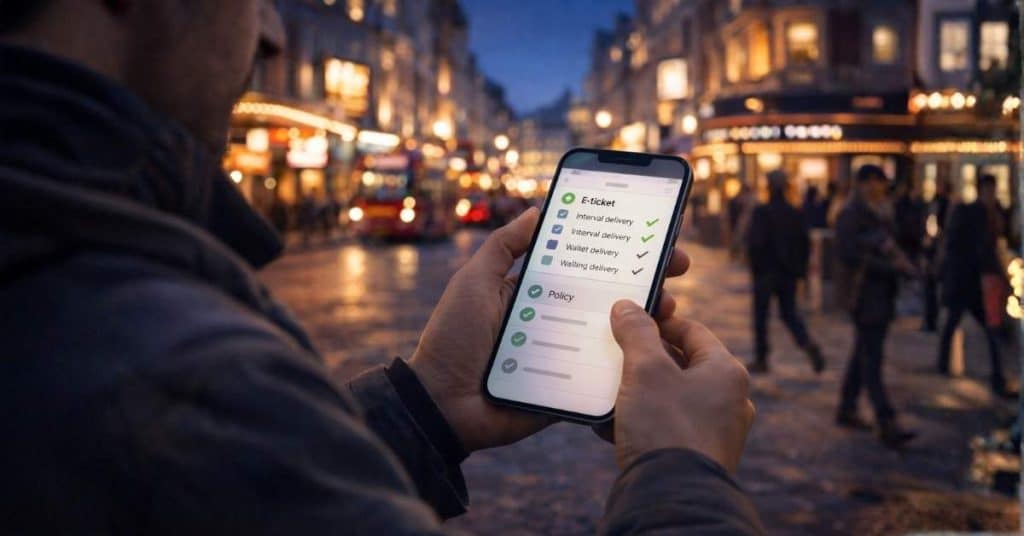
Ticket apps can be genuinely practical for London musicals, especially when you need fast decisions on busy travel days. A smart approach is to browse show options on musicalsandtickets.co.uk, then use a verified app checkout flow only when the listing details are clear and complete.
When apps help
- Speed: quicker search, filtering, and checkout than many desktop flows.
- Mobile wallet convenience: easy access at venue doors without printing.
- Last-minute inventory: useful for same-day plans and flexible schedules.
- Simpler UX: cleaner seat/category selection and fewer booking steps.
Bottom line: apps are useful when verified. They are not automatically the cheapest, and they are not automatically safer than direct box office purchasing.
Trusted-app criteria (not brand worship)
Before you pay in any app, run this neutral trust test:
- App store legitimacy: confirm the real publisher identity in the app listing.
- Clear refund/exchange language: policies must be visible before payment, not hidden after checkout.
- Named event partner or venue: listings should identify the ticket source chain clearly.
- Delivery method transparency: know whether your ticket is instant delivery or delayed e-ticket release.
Example app pathway
A practical example is TodayTix, which has visible London theatre inventory in major app stores. Treat it as a buying tool, not a blind trust shortcut: at checkout, verify who is fulfilling the ticket, confirm the event partner terms, and read delivery timing carefully before final payment.
Neutral rule: “Useful if verified” beats “looks popular.”
Confirm source, terms, and delivery every single time.
Tourist Traps and Scam Patterns Around West End Ticket Buying
West End demand is high, and that creates opportunity for both legitimate sellers and opportunists. A safe routine is simple: compare dates and options on musicalsandtickets.co.uk, then pay only when the seller identity and ticket terms are fully verifiable.
Physical tourist trap pattern (Leicester Square)
Leicester Square has one clearly identified official booth, but nearby ticket shops can look similar at a glance. Location alone does not prove legitimacy. Before paying at any counter, confirm the exact operator name, ask who fulfills the ticket, and request a full price breakdown including fees.
- Check identity first: business name, receipt name, and customer support details should match.
- Confirm ticket source: ask whether tickets are primary allocation or resale inventory.
- Refuse pressure: if staff push “buy now or lose it,” step away and verify calmly.
Digital red flags
Most online scams follow predictable patterns. If you spot one of these signals, pause immediately:
- Countdown pressure: “Pay in 2 minutes or seats are gone forever.”
- Unknown bank transfer request: especially from private accounts or messaging apps.
- Social post/DM bargain: unreal prices with vague seat details and no clear terms.
Plain-language safety rule: no clear seller identity + no clear terms + rushed payment request = do not pay.
Use traceable payment methods, keep screenshots, and escalate quickly through your payment provider and official fraud-reporting channels if needed.
The “too good to be true” price trap
Deep under-market prices often hide one of three problems: invalid tickets, duplicated barcodes sold to multiple buyers, or non-transferable tickets that fail at entry. The low headline price feels exciting, but the real risk is paying twice—once to the scammer and again for replacement seats on the day.
Short scenario: A family of four finds “premium” seats on Instagram at half price. The seller insists on instant bank transfer and sends blurry screenshots instead of proper confirmation. They pause, verify the seller path, and switch to a trusted checkout route—avoiding a costly same-night ticket failure.
Your Legal Rights in the UK Ticket Market
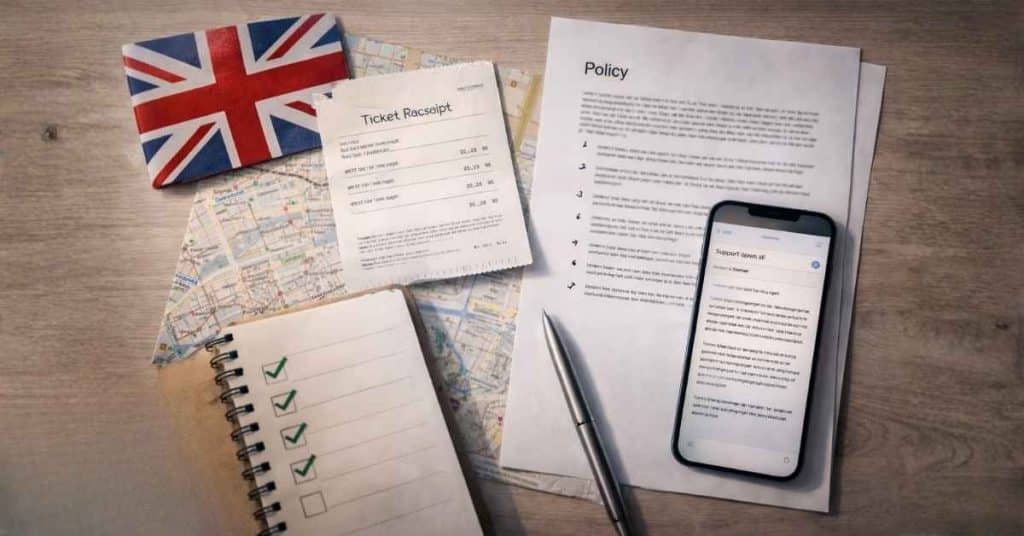
Secondary-ticket disclosures buyers should expect
In plain terms: if a ticket is being resold on a secondary platform, key facts should be visible before you pay.
If those facts are missing, treat that listing as high-risk and step away.
- Exact seat/area clarity: enough detail to identify where you will stand or sit.
- Use restrictions: age limits, student/child conditions, named-ticket rules, ID requirements, transfer limits.
- Face value visibility: the original ticket price should be disclosed.
- Seller relationship disclosure: whether the seller is connected to the platform or event organiser.
- Unique ticket number (where specified): if provided by the organiser/primary seller and relevant to location/validation.
Also, disclosure should be presented clearly and in time for a real decision, not buried after checkout steps.
A practical workflow in 2026 is: compare options on musicalsandtickets.co.uk, then only complete payment where all disclosure fields are visible and understandable.
Who enforces what
Think of enforcement in two layers:
- Trading Standards: frontline consumer-law enforcement at local level.
- CMA (Competition and Markets Authority): market-wide enforcement and action against non-compliant ticketing practices, including secondary markets.
For 2026 planning, the government position is that newer anti-touting measures are intended to be enforced through the UK consumer enforcement framework (DMCCA route), which includes the possibility of substantial financial penalties for breaches.
What changed after 2025 announcements
In late 2025, the UK government announced a package aimed at the resale market: a cap tied to original ticket cost (plus unavoidable fees), limits on resale volumes, and stronger obligations on resale platforms.
The crucial nuance: this is implementation-dependent. The government’s own wording says it will legislate “when parliamentary time allows.”
So in practical 2026 terms, treat these as announced reforms and verify current legal status before relying on them in a dispute or purchase decision.
Checked: February 2026
Use now: Apply currently active disclosure rules and platform/ seller transparency checks at checkout.
Watch list: Above-cost resale ban and related platform obligations (announced, status should be re-checked at time of purchase).
How to Buy Safely Step by Step (Pre-Purchase → Checkout → Post-Purchase)
Treat ticket buying like a quick SOP, not a gamble. You can compare dates, venues, and show options on
musicalsandtickets.co.uk, then complete payment only after every verification step below is done.
Before purchase (5 checks)
-
Seller verification (official/STAR/member directory):
confirm who is actually selling the ticket. Prioritise official production or venue sellers, then verified agencies.
If an agency claims standards compliance, cross-check membership status before moving forward. -
Seat/location/restriction clarity:
verify section, row, seat (or standing zone), plus any restrictions such as limited view, age limits,
named-ticket rules, or ID requirements. If details are vague, pause and do not pay. -
Total price visibility before payment:
confirm full cost before checkout completion: ticket price, booking fee, delivery fee, processing fee, and currency.
No hidden charges should appear after you commit. -
Payment method protections:
use payment methods with buyer protection and dispute pathways. Avoid payment routes that are difficult to challenge. -
Cancellation/exchange policy screenshot:
capture policy terms before payment, including cancellation rules, exchange windows, and delivery guarantees.
Keep this with your order evidence.
Go/No-Go Gate: If any one of the five checks fails, do not proceed to checkout.
At checkout
- Never pay an unknown seller via bank transfer.
- Prefer payment methods with dispute potential in case tickets are invalid, delayed, or misdescribed.
-
Capture proof immediately: save confirmation page, order number, ticket terms, and policy screenshots
before closing the browser or app.
Final pre-pay check: theatre name, performance date, local time, ticket quantity, and seating details must match exactly.
After purchase
-
Verify ticket format and delivery timing:
confirm whether tickets are instant mobile tickets, delayed e-tickets, or box office collection. -
Reconcile core details immediately:
theatre, show title, date, time, seat/zone, and buyer name format (if required) should all match your order. -
If mismatch appears, contact seller in writing the same day:
describe the issue clearly, attach screenshots, request correction or remedy, and keep all correspondence in one thread.
Keep an evidence pack: receipt, order number, policy screenshots, listing details, and all support messages until the show is completed.
If Something Goes Wrong: Recovery Playbook
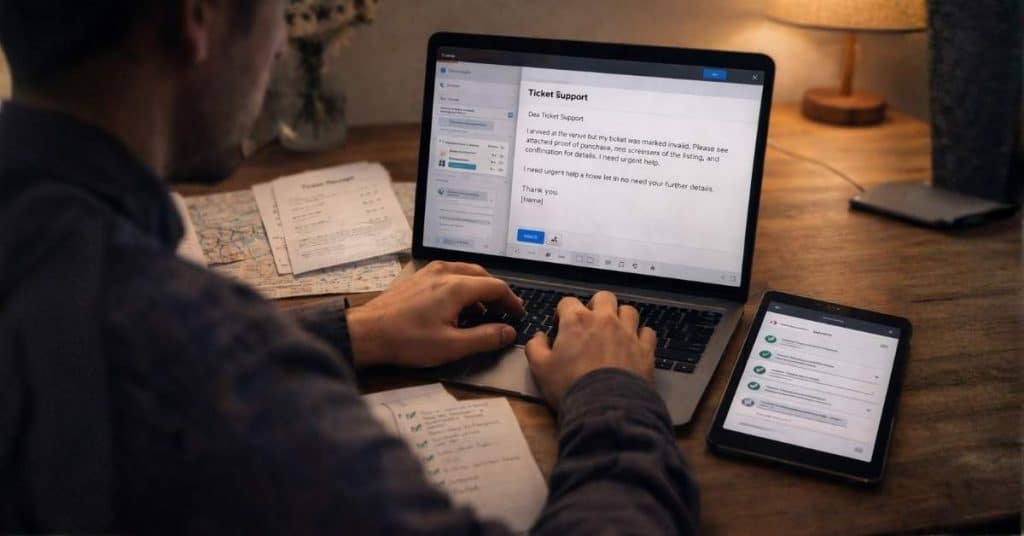
Problems are fixable if you move fast and document everything. Use this playbook the moment you notice an invalid ticket,
missing delivery, wrong seat details, or a denied entry issue.
First 24 hours
-
Contact seller support with written evidence
- Open one clear support thread (email or in-app message).
- State order number, event, date/time, and exact issue in one paragraph.
- Attach screenshots (listing, policy, confirmation, barcode/ticket status).
- Request a specific remedy: reissue, correction, exchange, or refund.
-
Escalate to payment provider/bank
- If seller response is delayed or unsatisfactory, open a dispute immediately.
- Use “service not provided / item not as described” framing where accurate.
- Submit your evidence pack in one upload to avoid fragmented review.
-
File a fraud report where appropriate (Action Fraud route)
- Do this when there are clear scam signals: fake seller identity, duplicated tickets, or deliberate misrepresentation.
- Include payment trail, conversation logs, and seller profile details.
Practical note: If you discovered the show on musicalsandtickets.co.uk, recovery still runs through the
final ticket seller/payment provider. Keep a screenshot of your checkout path to show where the transaction was completed.
When STAR membership helps
If the seller is a STAR member, you get a clearer escalation structure. Start with the seller’s internal complaint process,
then move through the STAR framework for unresolved member-case disputes, including ADR-style escalation where applicable.
This adds structure, timelines, and a recognised dispute pathway instead of ad-hoc back-and-forth.
What evidence to keep
- Payment receipt: transaction ID, amount, currency, timestamp.
- Listing screenshots: seat details, restrictions, promised delivery method/time.
- Policy copies: refund, exchange, cancellation, and delivery terms captured before/at checkout.
- Chat logs and emails: full conversation history with timestamps and agent names.
- Ticket barcode/status proof: issued/not issued, invalid/duplicated messages, gate scan result if available.
Rule to remember: speed + written evidence beats emotion + phone-only complaints.
Safe Ways to Save Money Without Risking Invalid Tickets
Saving money on West End tickets is absolutely possible without stepping into scam territory.
The key is simple: compare smartly, buy through verifiable channels, and treat “urgent mega-deals”
as a red flag until proven legitimate.
Use official discount channels first
Start with official discount routes before you even look at resale. A practical flow is to browse
shows on musicalsandtickets.co.uk, then complete checkout through trusted primary paths.
For same-day buying, Official London Theatre/TKTS is designed around official inventory, and that
channel states aligned same-day pricing between its online and in-person options.
Official-first rule: If an unofficial seller claims a “special price,” compare it
against official same-day channels before paying anything.
Seat strategy instead of random discount hunting
-
Restricted view vs full view:
restricted-view seats can reduce cost, but only if the obstruction is clearly disclosed and acceptable for your group.
If this is your first time seeing the show, full-view seats often give better value per pound. -
Weekday matinees:
midweek daytime performances frequently have softer pricing and calmer demand than peak evening slots. -
Shoulder dates / off-peak performances:
prices are often more reasonable outside school holidays, major event weekends, and high-tourist peaks.
Budgeting framework
Use a total-cost mindset before checkout so “cheap ticket” does not become an expensive night.
- Base ticket price
- Booking and delivery fees
- Transport (Tube, taxi, parking, late return)
- Interval snacks/drinks
- Contingency buffer (10–15% for surprises)
Avoid emotional overspend: countdown timers and “last 2 seats” language can push rushed decisions.
Pause for 60 seconds, re-check full cost, and confirm seller legitimacy before you pay.
Smart savings are not about chasing the lowest number on screen. They come from verified sellers,
better timing, and disciplined total-cost planning.
Real-World Buyer Profiles (Mini Scenarios)
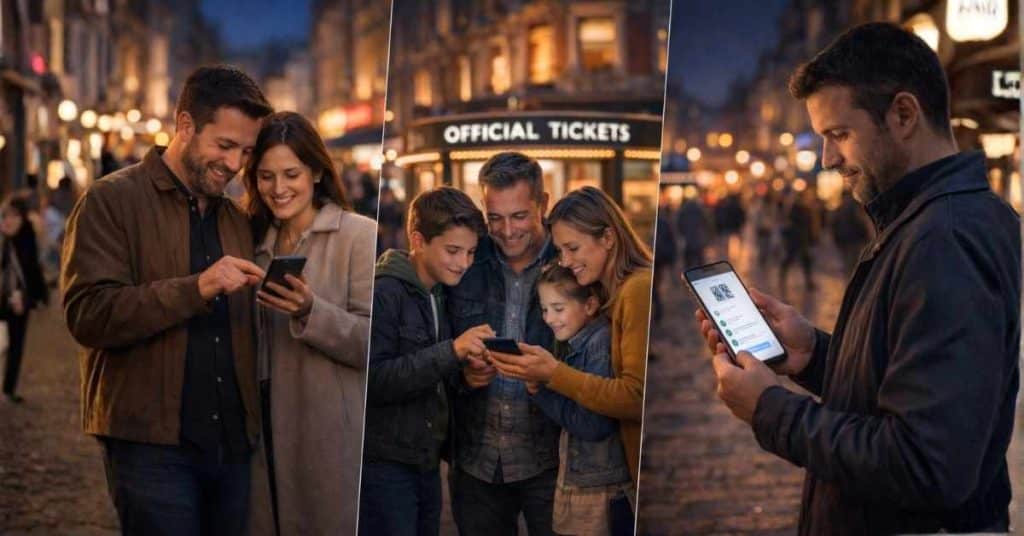
First-time tourist couple
Mia and Jordan are visiting London for three nights and want one guaranteed West End musical without stress. They shortlist shows, dates, and seat bands on musicalsandtickets.co.uk, then move to an official seller for final booking. To keep things simple, they use only one ticket app as a backup comparison tool, not five different platforms with conflicting terms.
- Step 1: Pick show + date from an official source first.
- Step 2: Compare once in a trusted app.
- Step 3: Verify seat details, restrictions, and total price.
- Step 4: Pay with a protected payment method and save screenshots.
Result: one clean purchase path, clear support channel, and no last-minute confusion at the theatre entrance.
Family of four on fixed budget
A family of four sets a hard cap before booking: tickets, transport, and interval snacks included. They track official discount channels first, then target weekday matinees where pricing is often softer. They accept rear stalls or clearly disclosed restricted-view seats only after checking whether the obstruction is minor and suitable for kids.
- Set total budget first, then divide by four tickets.
- Prioritise official same-day/discount inventory and matinee times.
- Confirm full checkout total (all fees) before payment.
- Reject unverified “family bundle deals” from random resellers.
Their rule is strict: if seat terms are vague or the seller pushes urgency, they skip the deal and keep the budget safe.
Last-minute solo buyer
Alex decides at 5:30 PM to catch a musical tonight. Speed matters, but control matters more. He checks official last-minute inventory and one trusted app, filters by immediate mobile delivery, and picks a seat with clear row/section data. Outside Leicester Square, he ignores street sellers using countdown pressure or “cash-only” language.
- Use verified channels with instant e-ticket or wallet delivery.
- Confirm theatre, curtain time, and seat details before paying.
- Avoid unknown bank-transfer or cash requests.
- Store confirmation email, order number, and ticket status screenshot.
He pays once, walks in calmly, and avoids the common solo-buyer trap: rushed purchases from unverified sellers minutes before showtime.
FAQ: Where to Buy London Musical Tickets Safely in 2026
Use this quick FAQ as your trust filter before you pay. The goal is simple: buy valid tickets, avoid panic decisions, and keep a clean paper trail if anything needs to be fixed.
1) Is TKTS in Leicester Square the same as every ticket booth in the square?
No. The official London Theatre Ticket Booth (partnered with TKTS) is specifically run by the Society of London Theatre (SOLT), and Official London Theatre states that other ticket shops in Leicester Square exist. So don’t buy just because a booth is nearby—confirm the operator identity first.
2) What are the safest websites for West End musical tickets?
Start with official production or venue box offices, then official London Theatre/TKTS channels, then verified STAR-member sellers. A practical workflow is: compare options on musicalsandtickets.co.uk, then complete payment only on a verified seller checkout page with clear terms, contact details, and delivery policy.
3) Is it safe to buy London theatre tickets from social media sellers?
High risk unless the seller is clearly verifiable and the listing includes complete ticket details. Most scam losses happen when buyers rush under pressure (“2 minutes left”) and pay through methods with weak recovery options. If seller identity, seat details, restrictions, and policy terms are unclear, walk away.
4) What payment methods are safest for ticket purchases?
Use payment methods that provide formal dispute pathways through your card issuer or payment provider. Avoid direct bank transfers to unknown individuals or unverified sellers, because recovery is usually harder if the ticket is invalid, duplicated, or never delivered.
Tip: pair safer payment with documentation—save confirmation pages, policy screenshots, and receipts at checkout.
5) How can I check if a ticket seller is legitimate in the UK?
Run a 30-second check: (1) verify seller route (official site or STAR member), (2) inspect URL and HTTPS, (3) confirm visible customer support details, (4) read refund/exchange and delivery terms before payment, (5) cross-check the same show and performance details on the show’s official page.
6) What information must a resale listing show?
For UK secondary ticketing facilities, buyers should be shown enough information to identify the seat/area, any use restrictions, and the ticket face value before purchase. If relevant, the listing should also make clear links between the seller and the resale platform/operator or organiser.
7) Are ticket apps reliable for London musicals?
Apps can be reliable if you verify them, not because the logo looks familiar. Check app-store publisher identity, in-app policy wording, event partner disclosure, and delivery method timing. Example: TodayTix is listed in major app stores and presents London theatre inventory, but you should still verify seller terms at checkout every time.
8) What should I do if my ticket is invalid at the venue?
Act immediately and in writing: contact seller support, attach your proof (order email, barcode/ticket status, listing screenshots, terms snapshot), and ask for urgent resolution. Then escalate to your payment provider. If the seller is a STAR member and internal support fails, use STAR’s ADR route.
9) Can I get a refund if a show is cancelled?
Usually yes, but the mechanism depends on who sold you the ticket and the terms accepted at checkout. This is why buying through a verifiable channel matters: cancellation and exchange rules should be visible before payment. Keep all confirmation records so support can process your case faster.
10) Is above-face-value resale illegal in 2026 yet?
As of February 2026, treat this as implementation-dependent. UK government announcements in late 2025 set out plans to legislate on stronger resale rules (including a cap direction), but timing depends on parliamentary process. So before relying on any headline claim, check the current legal status at the moment you buy.
Fast safe path: shortlist shows → verify seller → screenshot terms → pay with protected method → re-check performance date/time/seat immediately.